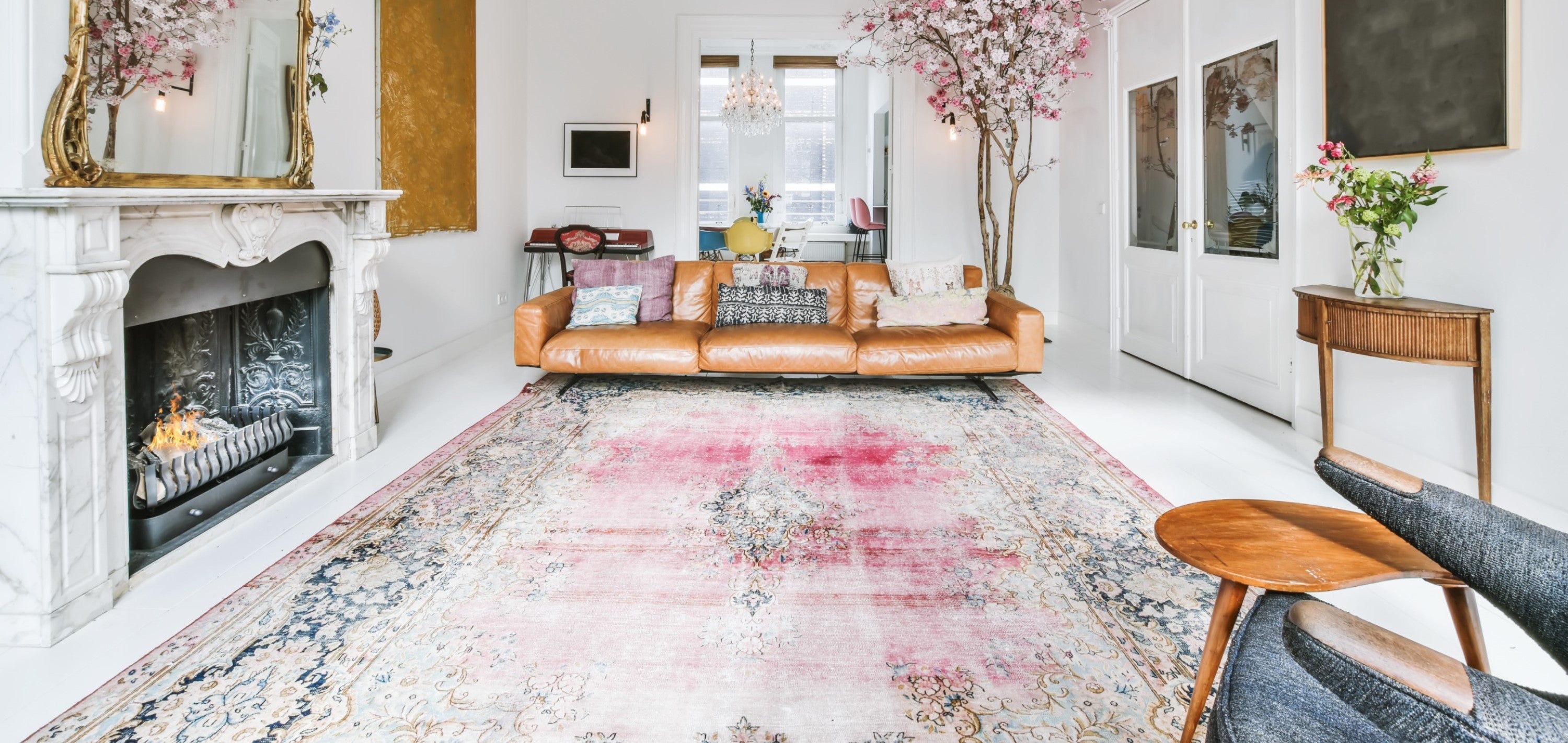
Buying a vintage rug isn't just beautiful — it's one of the most sustainable interior choices you can make. No new production, no synthetic fibers, no global supply chain. In this guide: why vintage and sustainability go hand in hand, with concrete figures.
The figures behind a 'standard' new rug
An average new machine-made rug (3×2 meters) made of synthetic materials has a carbon footprint of 30-60 kg CO₂: production, transport, packaging. Its lifespan is usually 5-10 years before it ends up in a landfill — polypropylene is, in fact, almost impossible to recycle.
A hand-knotted vintage rug: 0 kg of new production CO₂. It has already existed for 30-50 years. By buying it, you give it a new life cycle of another 30+ years.
5 ways in which vintage is truly sustainable
- Reuse. Every vintage rug that is reused = one less new rug that needs to be produced.
- Natural fiber. Wool is biodegradable. At the end of its life cycle (in 30+ years), it decomposes, unlike synthetic carpets.
- No chemical treatments. Vintage rugs are hand-dyed with natural pigments (plants, minerals). No flame-retardant chemicals like those found in many new synthetic carpets.
- Local craftsmanship. By buying vintage from Turkey, you support the preservation of centuries-old knotting techniques that are otherwise in danger of disappearing.
- Long lifespan. A well-made hand-knotted rug lasts 50-80 years. A synthetic carpet lasts 5-10 years.
What 'sustainable' actually means for wool
Not all wool is equal. With vintage Turkish rugs, we are talking about:
- Highland sheep wool from Anatolia — thicker and stronger than industrial wool
- Vegetable dyes in older rugs (madder root for red, indigo for blue, walnut for brown)
- Hand-spinning and hand-knotting — a production process without fossil fuels, only human labor
That is fundamentally different from the 'wool blend' rug at a large retailer, which often contains only 20% wool and the rest is synthetic.
Social sustainability: the craft
In Turkish villages, the art of rug knotting has been passed down from mother to daughter for a thousand years. Since 1990, the number of hand-knotters has been declining by ~5% per year as young people move to the city. By buying vintage, you acknowledge that craft and help maintain a market where older weavers can still earn a fair income for their expertise.
Maintenance = even more sustainability
A vintage rug that is well maintained can easily last another 30+ years. Practical tips:
- Vacuum without the beater bar
- Rotate it 180° every six months
- Take it outside to beat it once a year
- Blot fresh stains immediately
More in our complete maintenance guide.
Comparison: vintage vs. new machine-made
| Vintage hand-knotted | New machine-made synthetic | |
|---|---|---|
| Material | 100% wool | polypropylene / polyester |
| Lifespan | 50-80 years | 5-10 years |
| New production CO₂ | 0 | 30-60 kg |
| Biodegradable | Yes | No |
| Flame retardants | None needed (natural wool) | Often chemically added |
| Craft | Hand-knotted | Machine, factory |
| Unique? | Yes, piece by piece | No, mass-produced |
Conclusion
A vintage rug is more expensive to purchase than a cheap synthetic rug, but if you calculate it per year of lifespan, it is actually cheaper — and the environmental impact is dramatically lower. Plus: you have a unique piece in your home that will still be beautiful in 30 years.
Our vintage collection consists of 200+ unique hand-knotted pieces from Turkey — each with its own story and a new future in your interior.
Questions about the origin of a specific rug? We are happy to tell you where it came from and how old it is. Send us an email.