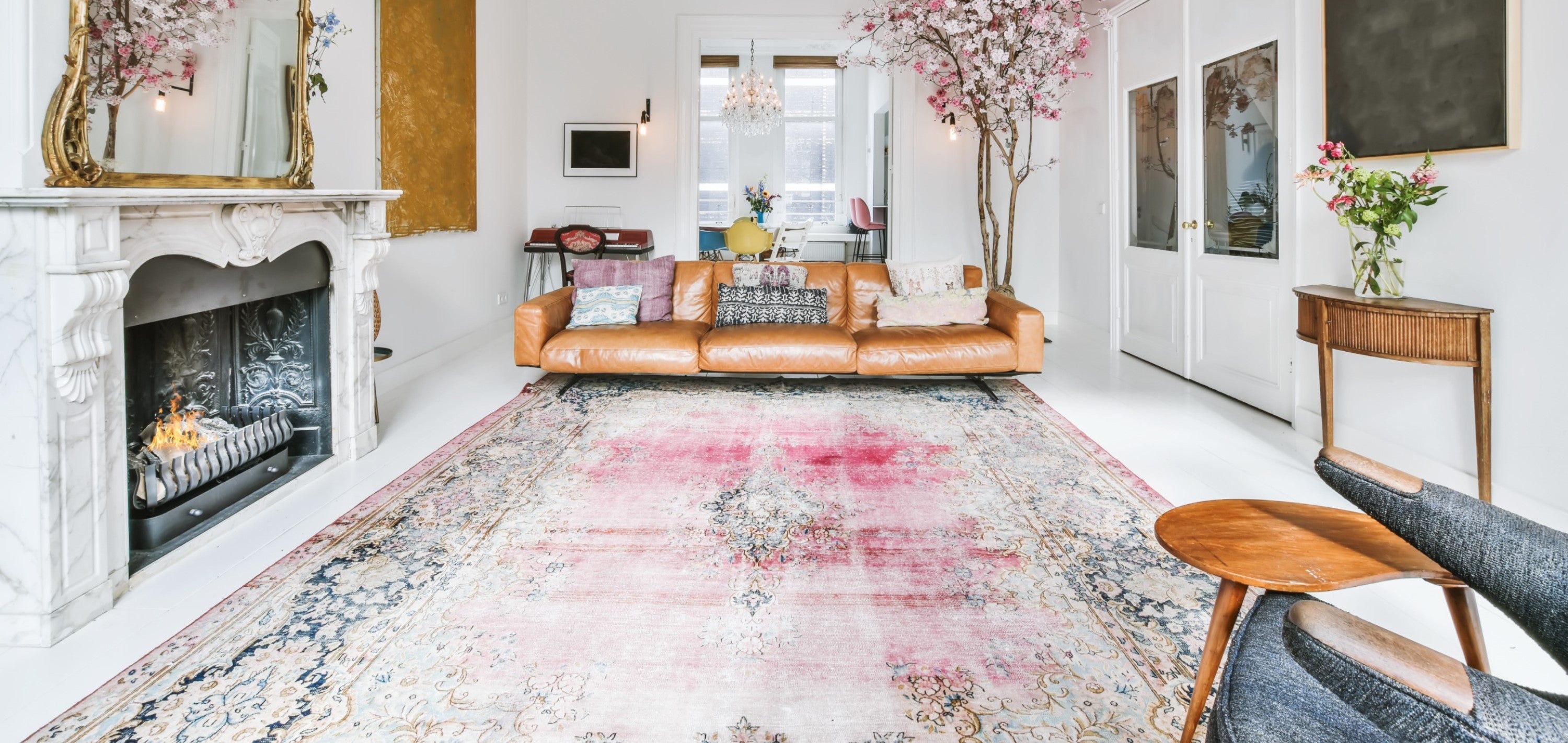
A rug under the dining table is more than just decoration — it largely determines the atmosphere of your entire dining area and has practical benefits you might not always expect. In this guide: which size fits, which material works best under chairs, and how to combine it with the rest of your interior.
Which size do you need?
The critical rule: the rug must be larger than your dining table plus at least 60 cm on all sides. Chairs must also remain fully on the rug when pushed out, otherwise they will keep sliding off the edge and your rug will get damaged at the borders.
- Dining table 160×90 cm → rug 280×190 cm
- Dining table 180×90 cm → rug 300×210 cm
- Dining table 200×100 cm → rug 320×220 cm
- Round dining table Ø120 cm → round rug Ø 240 cm
Our size guide with visual examples shows what the rug looks like for every dining table size.
Which material works best?
Under a dining table, chair legs will roll over your rug countless times. Three choices with their pros and cons:
- Kelim (hand-woven, flat): the practical winner. No pile, so chairs slide effortlessly. Lightweight, easy to beat out outside every few months. View kelim rugs.
- Low-pile vintage: the all-rounder. Knotted wool, sheared low — chairs move over it well, and the rug has more character than a kelim. By far the most popular choice for dining rooms.
- High-pile: not recommended. Chair legs get stuck, stains soak in easily, and the height differences under the table are annoying.
Practical benefits that people forget
- Sound absorption. Sliding chairs on a hard floor? Much quieter with a rug underneath. Especially relevant in modern interiors with concrete floors or large tiles.
- Floor protection. Scratches and wear from chairs moving hundreds of times a month. A rug protects the floor and is cheaper to replace than sanding an entire floor.
- Visual 'room within a room'. An open kitchen-dining area feels less empty if the dining area has its own rug — it zones the space.
- Warmth. Especially nice in winter for bare feet and little toes.
Style: which rug fits which type of dining table?
- Wooden table + Scandi chairs → kelim with geometric patterns or a light beige vintage rug
- Sleek designer table + steel base → grey or black low-pile vintage, understated pattern
- Long farmhouse table + diverse chairs → warm red, orange, or patchwork vintage — it can stand out
- Marble or glass table → pattern-rich vintage as a visual anchor
Frequently Asked Questions
What if my rug gets food stains?
Wool naturally repels liquid — blot immediately with a dry cloth, do not rub. For stubborn stains: read our cleaning guide.
My vintage rug isn't rectangular, is that okay?
Vintage rugs are often slightly irregular. That is part of the charm. Just ensure the narrowest side is still at least 30 cm larger than your table width.
Do I need an anti-slip mat underneath?
On smooth floors (tile, vinyl, polished concrete) yes. On carpet or wood, usually not necessary.
Making a definitive choice
First measure your dining table + 60 cm all around. Then filter our vintage rug collection by that width and length. Doubting between two sizes? Always choose the larger one — being a fraction too big is fine, being too small is not.
Questions about a specific dining table setup? Email us or check the visual size guide.