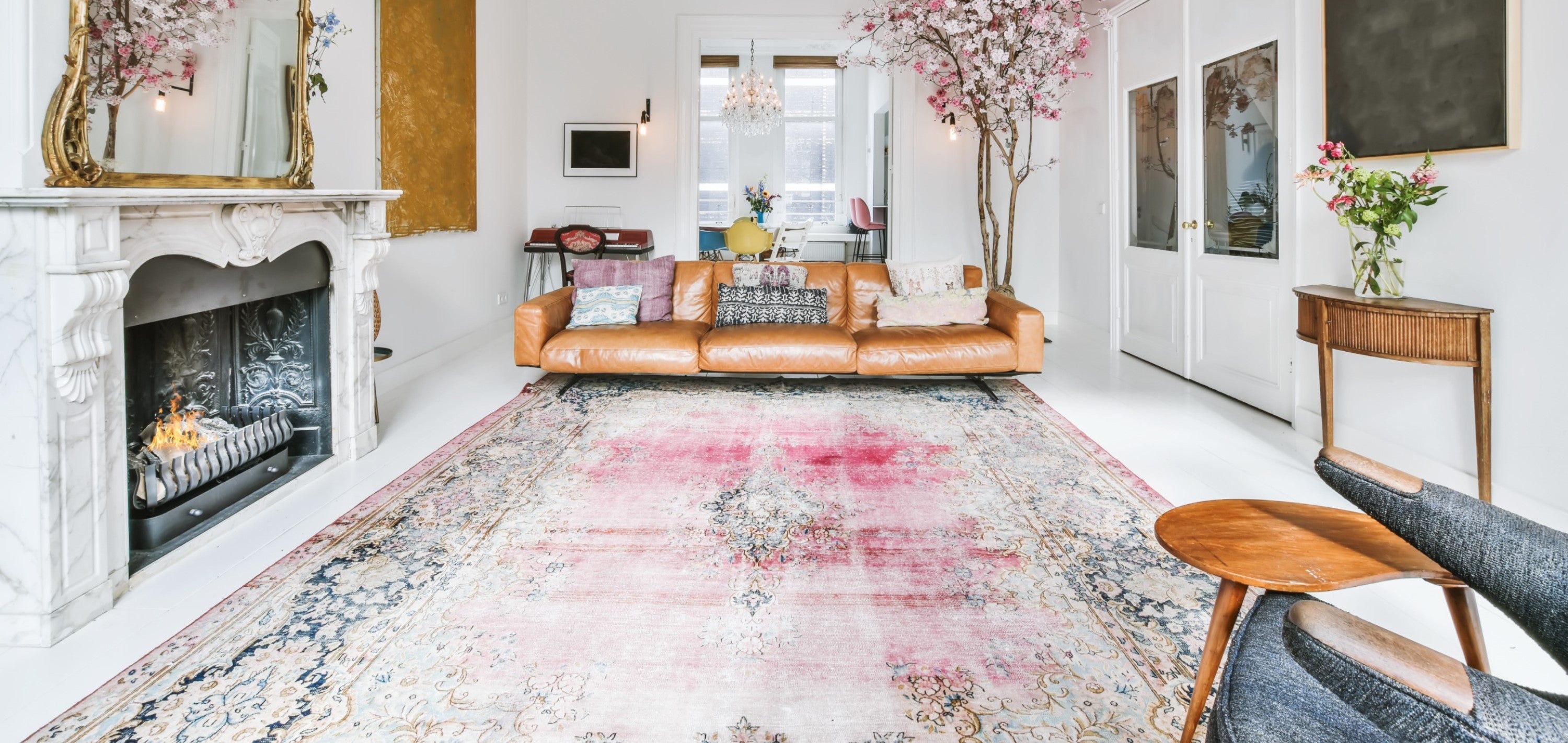
Choosing a color for your rug is harder than choosing a color for your walls — the rug is in your line of sight and sets the mood for your entire room. In this guide: how to determine the right color based on your interior style, light, and existing furniture.
The 3-color rule
A well-designed interior has one main color (60%), one secondary (30%), and one accent (10%). Your rug can fulfill any of these three roles:
- Main color (neutral/large) → beige, gray, light brown, or cream. Safe and timeless.
- Secondary color → soft pink, dark blue, mustard, green — the rug makes a statement without shouting.
- Accent → bright red, orange, turquoise, purple — a statement piece for a small space or as a visual anchor.
By interior style
Modern minimalist
Clean furniture, little color in the room? Choose an understated color with a rich pattern. Vintage gray, beige, or a muted blue works best. The pattern adds character without the color 'popping' too much.
Scandi / Japandi
Light colors, wood, natural materials. Soft powder tones or cream — such as light vintage rugs in beige and cream. Not too busy a pattern. A simple kilim can also be beautiful.
Bohemian / eclectic
Here, color is welcome. Combine boldly: pink, orange, red, or a busy multi-colored kilim are all fair game.
Industrial / loft
Concrete, steel, dark wood. A warm contrast works best: vintage red, terracotta, or warmer orange brings humanity into an otherwise stark space.
Classic / rustic
Dark furniture, warm tones. Deep red, dark green, or brown vintage carpets with classic patterns fit perfectly. See also our classic rugs.
By room
- Living room → your most important investment. Better one statement rug than a safe, boring one. The rug you'll still love ten years from now. View large rugs.
- Dining room → a bit more practical; choose colors that don't immediately show stains. Pattern-rich vintage or kilim in mid-tones.
- Bedroom → quiet tones for a good night's sleep. Soft pink, blue, beige.
- Children's room → cheerful but not loud. Lighter shades of pink, blue, or yellow. View rugs for the children's room.
- Hallway/corridor → darker is practical (hides dirt). Bordeaux, dark blue, dark brown. View hallway runners.
Light: north vs south
A room facing north has cold light. Warm colors (terracotta, orange, yellow) soften that. A room facing south gets a lot of warm light — here you can use cooler colors (blue, green, gray) without it feeling chilly.
The 5 biggest color mistakes
- Choosing too 'safely'. Beige on beige on beige = no atmosphere.
- Exact match to the sofa. It looks better with tonal variation (same color family, different intensity).
- Bright accents in a small space. In a 12 m² bedroom, fuchsia becomes too dominant. Keep tones subdued.
- Light color in a high-traffic area. A hallway with a cream rug = dirt visible within 2 weeks.
- Not considering a pattern. Sometimes a pattern-rich rug adds more character than a new color choice.
In practice: how do you do it?
- Determine your main furniture color (often the sofa or dining table).
- Choose a rug color that either complements (same family, slightly different) or contrasts (complementary). Avoid "identical".
- View our vintage collection using the color filter.
- If in doubt: send us a photo of your room for personal advice.
Still torn between 2 colors? At Lavinta, returns are easy — 14 days to decide if the color is right for your room.