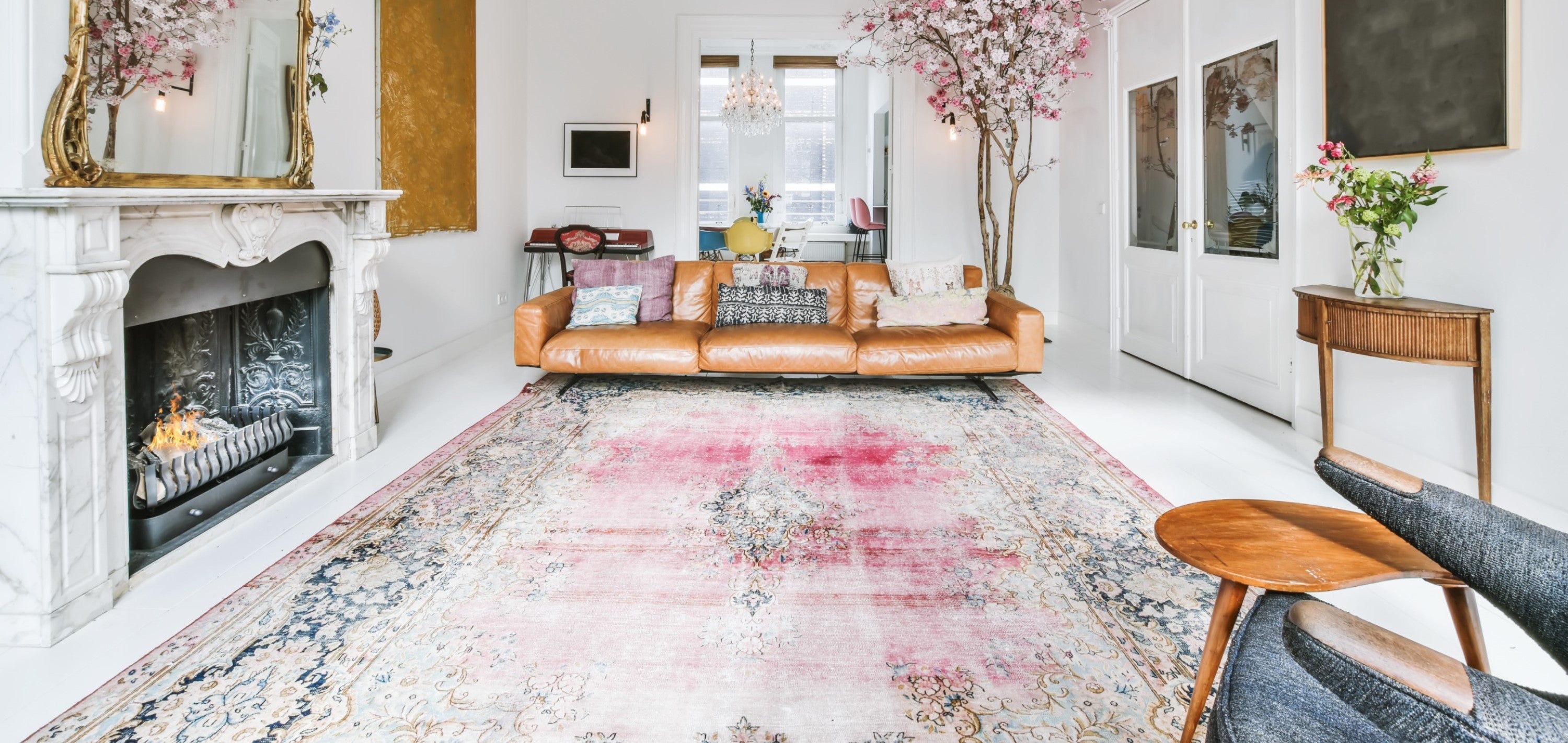
A kilim is not a "regular rug." It is an ancient flat-woven carpet with a story in every thread — literally. In this guide: how they are made, where the patterns come from, and why they are so popular in Dutch interiors right now.
What makes a kilim different from a regular rug?
A traditional rug is knotted: hundreds of thousands of knots per square meter, with a soft pile on top. A kilim is woven: wool or cotton threads go between vertical warp threads, just like a large piece of fabric. The result:
- No pile — flat surface, easier to keep clean, no feet 'sinking' into it
- Lightweight — a 240×170 kilim weighs about 4-5 kg, whereas a hand-knotted vintage rug easily weighs 12-15 kg
- Reversible — flipping it provides a slight color variation
- Geometric patterns — the weaving technique lends itself to angular shapes, not floral curves
The history: not just 'Oriental', but specific
Kilims have been made for over 7,000 years across a broad region: Turkey, Iran, the Caucasus, and Central Asia. The Turkish kilim has its own characteristics: often brighter colors, highly geometric patterns, and symbolism that is generations old. A diamond pattern = protection. An S-shape = water or prosperity. A hand = warding off evil.
Most kilims in our collection come from central and eastern Turkey, where the weaving technique in villages is still passed down by hand from mother to daughter. View our authentic Turkish kilims.
How long does a kilim last?
With normal use, easily 40-60 years. The vintage kilims we sell are often already 30-50 years old and still in top condition. Wool is naturally durable, stain-resistant, and able to withstand high foot traffic.
Where do you place a kilim?
Three favorite spots:
- Under the dining table. Due to the flat structure, chairs slide effortlessly — much more practical than a high-pile rug. Count on table dimensions + 60 cm all around. Our dining table guide provides concrete measurements.
- In the hallway or entryway. Lightweight + easy to keep clean = ideal for high-traffic areas. A narrow model 80-100 cm wide often works best.
- As a wall tapestry. Older kilims in particular are often hung as wall decor. The patterns really come into their own at eye level.
Kilim vs. vintage knotted: which one to choose?
Simple decision tree:
- Looking for a colorful pattern and a relatively light rug? → Kilim
- Looking for a soft, warm look with pile? → Hand-knotted vintage rug
- Seating area where you often sit on the floor? → Knotted (softer)
- Dining room or hallway? → Kilim (practical)
Maintenance in 5 points
- Vacuum regularly without a beater brush (the brush can pull out threads)
- Rotate the rug 180° every six months for even wear
- Stain? Dab immediately with a dry cloth, do not rub
- Beat it out outdoors once a year or have it professionally cleaned
- Not in direct sunlight — wool fades faster than synthetic fibers
More detail in our rug cleaning guide.
Frequently asked questions
Are all kilims the same?
No — each region has its own patterns. Turkish, Anatolian, Persian, and Afghan kilims each have their own style. In our collection, you will mainly find Turkish pieces.
Can a kilim go over underfloor heating?
Yes, actually very well. Flat woven = heat passes through easily. With a high-pile rug, heat can get 'trapped'.
Are kilims suitable for allergy sufferers?
Wool repels dust instead of trapping it. Unfortunately not for wool allergies, but for dust, pet, or pollen allergies, it is a better choice than synthetic.
Concrete: view the collection
Our stock of Turkish kilims changes constantly — each piece is hand-woven and unique. View all kilims and filter by size or color.