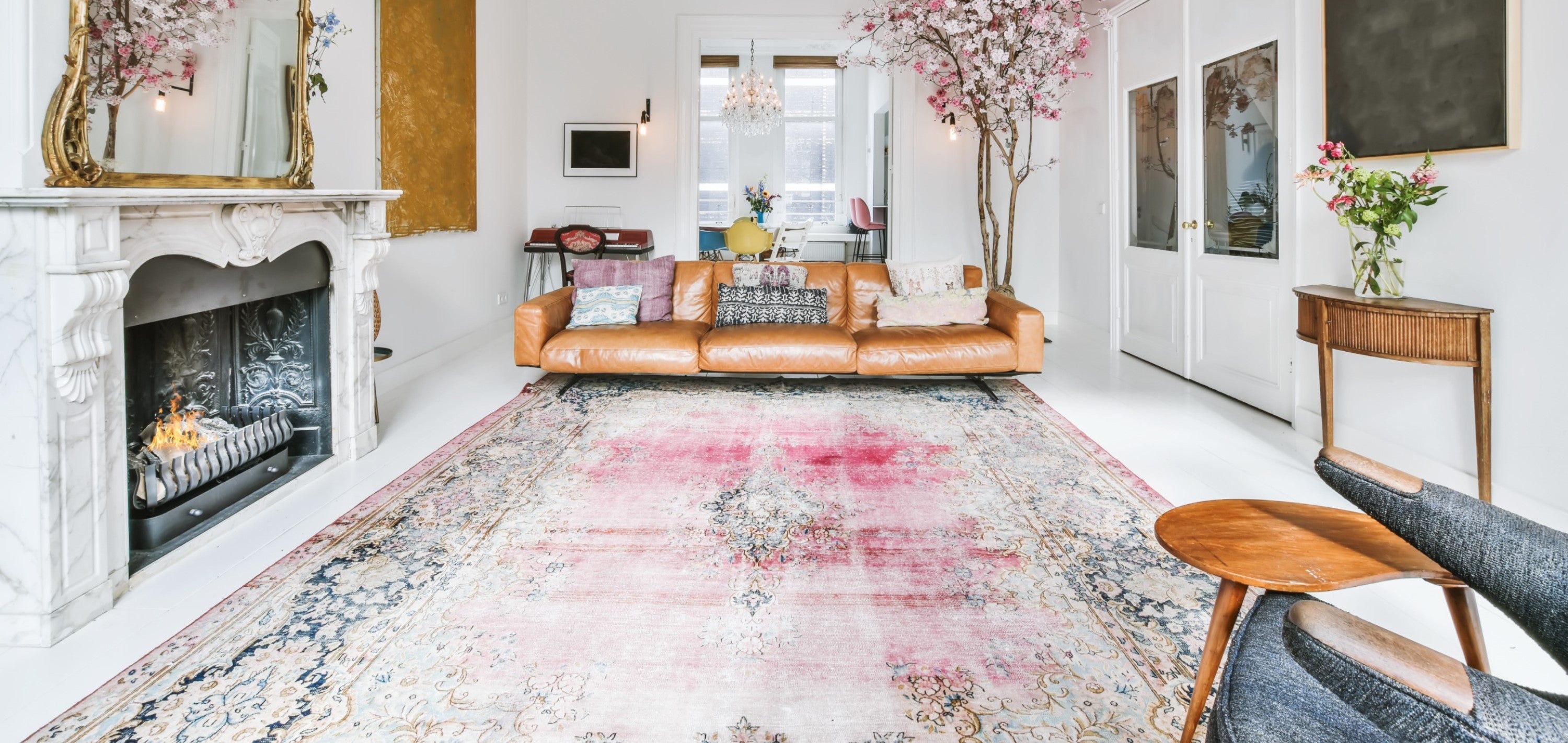
A silk rug represents the pinnacle of what carpet art has to offer. Lustrous, finely knotted, with patterns so detailed that they resemble paintings. But silk is also a market where inexperienced buyers can easily end up with a disappointing product. In this guide: how to recognize a genuine silk rug, what the quality criteria are, and what you can expect in terms of price.
What makes silk different?
Silk reflects light in a unique way: from one angle the rug appears darker, from another almost glowing. Consequently, a silk rug has a vibrancy that wool can never achieve. Moreover, silk allows for extremely fine knots — up to 1 million knots per square meter, compared to 100,000-300,000 for wool. This explains why patterns can be so refined.
Our silk rugs are made from bamboo silk and finished by hand. Further on, you can read about what bamboo silk is and how it compares to silkworm silk.
Silkworm silk, bamboo silk, and viscose: what is the difference?
- Silkworm silk — the classic natural silk from the cocoon of the silkworm. Very fine, highly lustrous, and the most expensive.
- Bamboo silk — a soft, lustrous fiber extracted from bamboo cellulose. It has the rich sheen and soft feel of silk, is more affordable, and takes color beautifully.
- Viscose / "art silk" — a generic name for cellulose-based fibers. Quality and origin vary widely.
None of these materials are "fake" — the key is that it is stated honestly. Selling a bamboo silk rug as "pure silkworm silk" is misleading; selling a bamboo silk rug as bamboo silk is simply a good choice for those seeking sheen and softness at a fair price.
5 ways to recognize genuine silk
- Luster when turning. Move the rug under a light. Real silk changes tone depending on the viewing angle. Synthetic silk imitations have a flat, static sheen.
- Feel it. Silk feels cooler to the touch than wool or synthetics. When warmed by hand, it heats up more quickly.
- Burn test (extreme case, do not try at home). Real silk burns slowly with the smell of "burnt hair." Synthetics melt and become sticky.
- Knot density. Turn the rug over — the finer the knots visible on the back, the more likely it is to be genuine silk.
- Weight. Silk is light. A large silk rug weighs less than a comparable wool rug.
Quality criteria to assess
1. Knot density (KPSI = knots per square inch)
- 200-400 KPSI = standard quality
- 500-800 KPSI = good quality
- 900-1500 KPSI = high quality, often fine Turkish Hereke rugs
- 1500+ KPSI = museum quality
2. Pattern precision
Check if the pattern flows seamlessly. In high-quality silk, patterns are worked out in detail without fragmentation.
3. Color consistency
No dark or light patches that appear to have been knotted in by accident. Slight natural variation is OK, abrupt differences are not.
4. Edges and fringes
Taut finishing, no loose or damaged edges.
Where should you place a silk rug?
In a place where it stands out and is protected. Silk is more fragile than wool:
- ✅ Bedroom — less foot traffic, perfect for a luxurious feel
- ✅ Formal living room — as a statement piece in a quiet seating area
- ✅ Wall tapestry — hanging above a sofa or bed allows patterns to come to life best
- ✅ Dining room (only under the table) — chairs slide off the rug, so it must be large enough
- ❌ Hallway or corridor (too much traffic)
- ❌ Spot with direct sunlight (UV fades silk)
- ❌ Children's room (too fragile)
Price ranges
What you can expect for handmade silk:
- Small decorative piece (60×90 cm) silk: €125-300
- Bedroom size (150×220 cm) silk: €800-2,500
- Living room size (200×300 cm) silk: €2,000-8,000
- Museum-quality Hereke with high KPSI: €10,000+
Looking for the luster of silk at an accessible price? Check out our bamboo silk rugs — beautiful as an accent in the bedroom or as wall decoration.
Silk maintenance
- Vacuum carefully on a low setting (no beater bar)
- Never clean with water — dry clean only or consult a professional
- Keep away from direct sunlight
- Avoid moisture (bathrooms, near plants that need watering)
- Stain? Dab immediately with a dry cloth, no water
5 common buying mistakes
- "Pure silk" without proof. Always ask for a certificate or clear production information.
- Not asking what kind of silk it is. Silkworm silk, bamboo silk, and viscose differ in price, sheen, and maintenance. An honest seller simply states the material in the description.
- For under a dining table with children. Too fragile. Choose a vintage wool or kilim rug instead.
- Directly under bright sun. Visibly fades within 1-2 years.
- Too big for a small room. Silk is a luxury — in a 12 m² room, a 2.5 m large rug becomes visually overwhelming.
In doubt about a specific silk piece? Email us for advice on material, origin, and finishing.