Choosing between high-pile and low-pile is more practical than you think — and determines 80% of whether you’ll be happy with your rug afterwards. A soft, high-pile rug in a dining room is a nightmare. A low-pile vintage rug in a bedroom feels colder than necessary. In this guide: per room, per situation, what to choose.
What is the difference?
- High-pile = pile 1-5 cm. Soft, sinking-in feeling, insulates sound and heat well.
- Low-pile = pile 0-1 cm. Sleeker, easier to keep clean, chairs slide effortlessly.
- Flat-woven (such as kilims) = 0 cm pile. Extremely low, super durable.
The choice per room
Living room
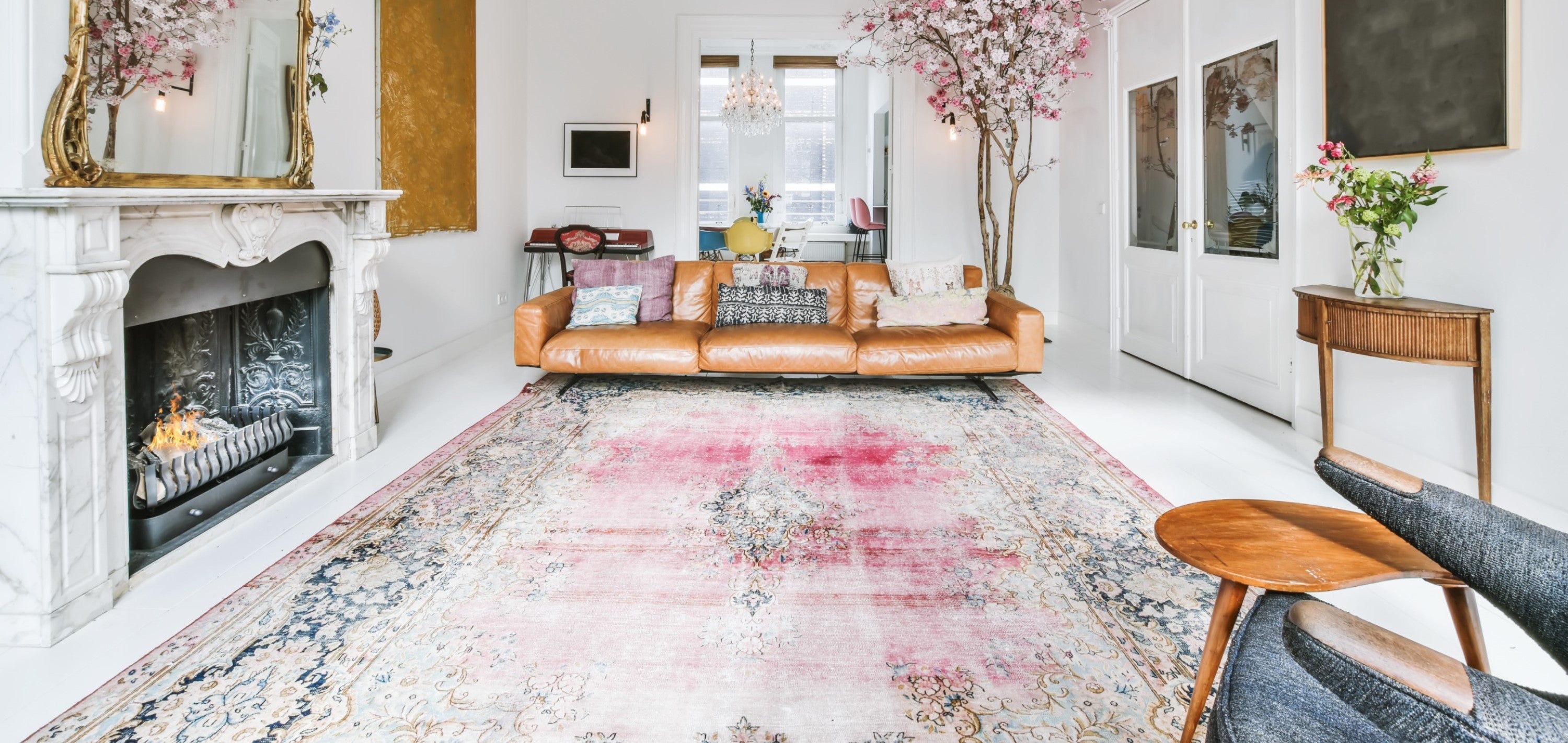
Here, low-pile (vintage) is the winner in 80% of cases. Reason: the coffee table needs to be stable, crumbs are easy to vacuum up, and vintage adds more character than a solid-colored high-pile rug.
Exception: kid-friendly play area where children sit on the floor a lot → then high-pile.
Dining room
Almost always low-pile or flat-woven. High-pile makes for wobbly chairs and is a stain magnet when food is spilled.
→ Kilims or low-pile vintage
Bedroom
High-pile is allowed here. No chairs, little dirt. Lovely and soft underfoot in the morning. Or: low-pile vintage with more character.
→ Both work, personal preference
Nursery / baby room
Soft high-pile (provided it is easy to clean). Safer for falls, warmer for sitting and playing. Better to choose wool than synthetic to keep stains treatable.
Study / home office
Low-pile (desk chair wheels!). High-pile prevents a desk chair from rolling freely — a guaranteed annoyance.
Hallway / corridor
Flat-woven or low-pile. Heavy traffic = lots of dirt. High-pile catches everything you track in.
Kitchen
Flat-woven, narrow. A kilim runner is perfect.
Bathroom
No wool rugs. Too much moisture. Use a special bathroom mat.
Practical differences
| High-pile | Low-pile | |
|---|---|---|
| Comfort underfoot | Softer | Sleeker |
| Sound insulation | Better | Less |
| Heat insulation | Better | Less |
| Chairs/wheels | Difficult | Free |
| Dirt collection | High | Low |
| Cleaning | Harder | Easier |
| Lifespan | 20-30 years | 30-80 years |
| Vintage available? | Rare | Standard |
The vintage context
Almost all vintage Turkish rugs are naturally low-pile or have become so because they have been washed and "sheared." That is what makes them "vintage-modern": the original knotting remains, but the surface is sleeker. High-pile vintage is rare and usually more expensive because it is less processed.
5 mistakes people make
- High-pile under a dining table → chairs "sink" and stains are a disaster
- Low-pile in baby room → feels too cold, not safe enough for falls
- High-pile in study with desk chair → wheels get stuck
- High-pile in hallway → ruined by dirt after 4 weeks
- Low-pile in a drafty bedroom in an old house → feels colder than necessary
Concrete choice
Need to decide quickly?
- Heavy use? → low-pile (vintage or kilim)
- Dining or workspace? → low-pile or flat-woven
- Lovely and soft on bare feet? → high-pile in bedroom, low-pile with underlay in other rooms
- Beautiful patterns important? → low-pile (patterns more visible)
View our vintage and kilim collections for low-pile and flat-woven options.