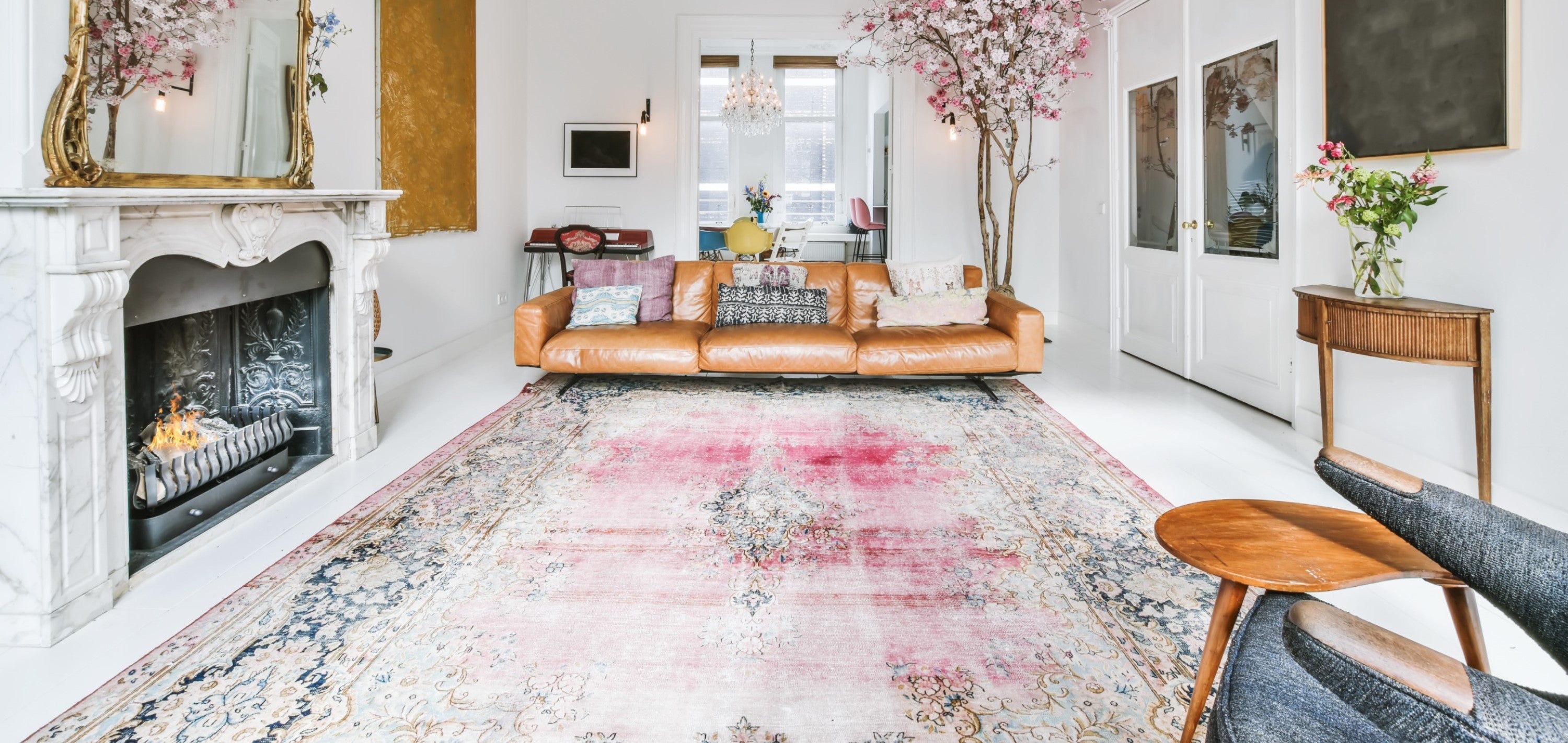
Handmade rugs are often lumped together — "Oriental" or "Persian" as umbrella terms. But there are fundamental differences between the 4 main types you encounter in the Netherlands: Kilim, Persian, Gabbeh, and Kazak. Each with its own history, weaving technique, and style. This guide explains the difference.
1. Kilim (Turkish / Anatolian)
Origin: primarily Turkey, also Iran, Caucasus, Central Asia
Weaving technique: flat-woven (no pile) — threads pass between warp threads
Patterns: geometric, angular, rich in symbols (diamond, star, S-shapes)
Material: wool (sometimes cotton warp thread)
Weight: light (4-6 kg for 200x150)
A kilim is flat without pile, lightweight, and usable on both sides. Often used in villages for daily use — as a floor rug, wall hanging, or even as a storage bag. Our kilim collection consists of authentic Turkish pieces.
2. Persian (Iran)
Origin: Iran (formerly Persia)
Weaving technique: hand-knotted with pile (Persian knot, dense structure)
Patterns: central medallion, borders with floral motifs, often symmetrical
Material: wool or silk, sometimes mixed
Knot density: 200-1000 KPSI
Persian rugs are the most refined of the Oriental tradition. Specific regions (Tabriz, Isfahan, Qom, Kashan) each have their own pattern vocabulary. Genuine Persian is often more expensive and is sometimes purchased as an investment. Not what you typically find at Lavinta.
3. Gabbeh (Iran, Southern Iran)
Origin: Southern Iran, originally nomads of Qashqai and Lori
Weaving technique: hand-knotted, longer pile than Persian
Patterns: simpler than Persian — large solid fields, simple animal or plant motifs
Material: coarser wool from mountain regions
Character: rugged, primitive, natural colors
Gabbeh is "peasant-rug" — made by nomadic families for their own use. As a result, less fine than Persian, but with more character. Popular in modern-rustic interiors.
4. Kazak (Caucasus, Azerbaijan/Armenia)
Origin: Caucasus (border region of Azerbaijan, Armenia, Georgia)
Weaving technique: hand-knotted, medium knot density
Patterns: large geometric medallions in bright red/blue/other, often "hooked" cross shapes
Material: coarser wool, strong colors
Character: powerful, primary, geometric
Kazak rugs are clearly recognizable by their large central geometric shapes. Often in bright primary colors — red, blue, ivory.
Comparison table
| Kilim | Persian | Gabbeh | Kazak | |
|---|---|---|---|---|
| Pile? | None | Short-medium | Long | Medium |
| Pattern | Geometric | Floral/medallion | Simple/figurative | Large geometric |
| Knot density | n/a | High | Low-medium | Medium |
| Character | Symbolic | Refined | Primitive | Powerful |
| Fits in | Boho, modern | Classic | Rural, rustic | Industrial, modern |
Which one suits you?
- Do you like geometric patterns and lightweight? → Kilim
- Do you like classic refinement, stately appearance? → Persian (investment)
- Do you like a rugged, unpolished character? → Gabbeh
- Do you like powerful geometry in primary colors? → Kazak
What does Lavinta have?
Our focus is on Turkish vintage rugs and Kilims — we have been working with the same Turkish suppliers for years and therefore specialize in this tradition. View our vintage collection and kilims. For Persian, Gabbeh, or Kazak: feel free to ask us for recommendations, as we know specialist dealers.