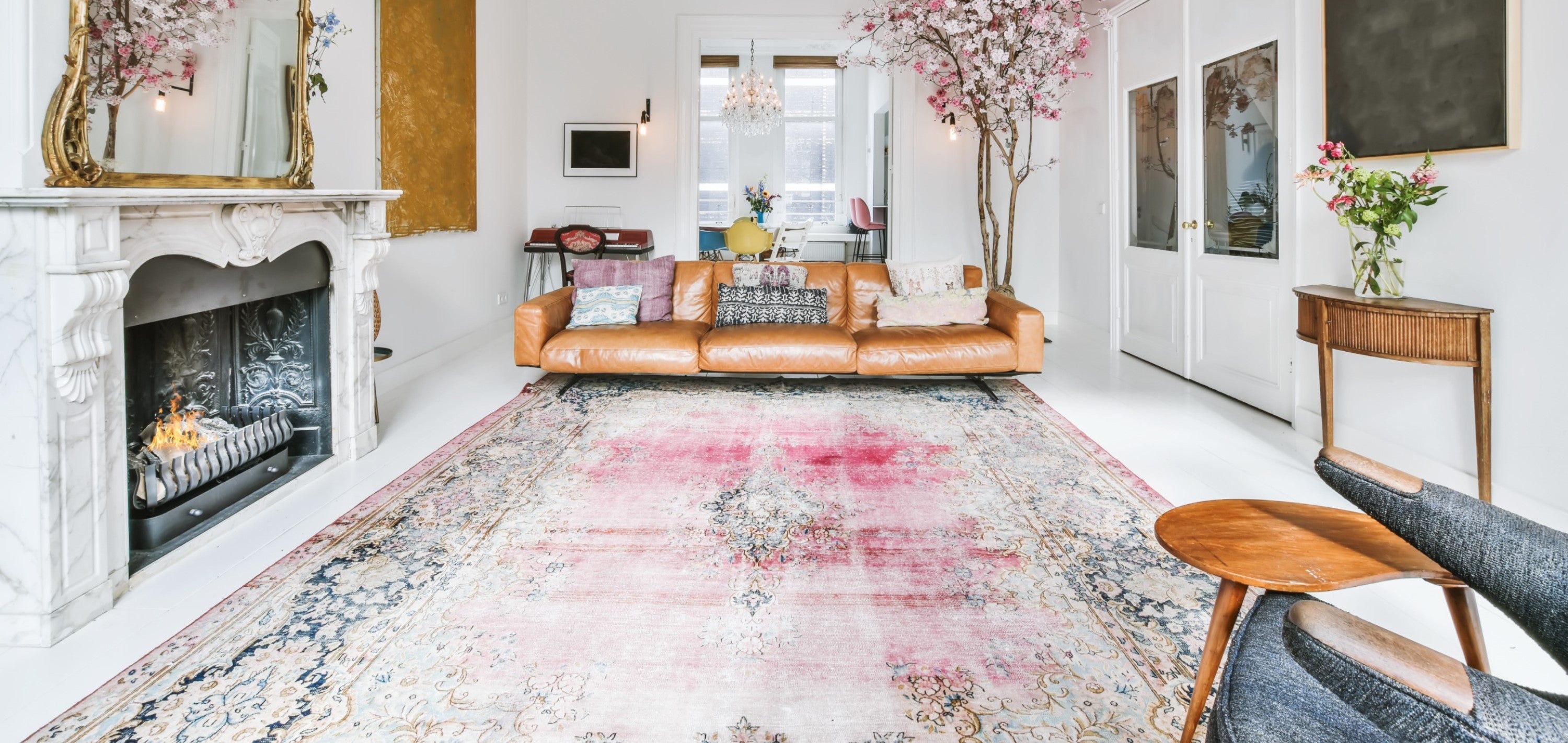
A vintage rug can last for decades – provided you treat it well. Good news: it doesn't have to be complicated. In this step-by-step guide, we share everything we've learned in 10+ years at Lavinta about maintaining hand-knotted wool rugs.
👉 Not yet familiar with vintage? First read our complete guide to vintage rugs.
1. Weekly vacuuming – the basics
Dust and sand are the silent destroyers of a rug. Grains of sand act like sandpaper between the wool fibers when you walk over them. Therefore: vacuum weekly, ideally twice a week in high-traffic areas.
Important: set the vacuum cleaner to a normal setting without an aggressive brush roll. A brush roll can pull loose wool fibers from a vintage pile. Many modern vacuum cleaners have a 'carpet' setting that works without a brush – your rug will benefit from this.
The vintage trick: the other side too
Once a month: turn the rug over and vacuum the back. Deep dust collects there, sinking through the pile. This greatly extends its lifespan.
2. Stains – what to do (and especially what NOT to do)
Wool has a natural lanolin layer that repels stains. Therefore, you often have a few 'free' minutes to react before the stain really sets in.
The golden step-by-step plan
- Blot immediately, do not rub. Grab a clean white cloth or paper towel and blot from the outside in. Rubbing pushes the stain deeper and can damage the fibers.
- Absorb moisture. Sprinkle salt or baking soda over a wet stain (red wine, coffee). Let it sit for 10 minutes and then vacuum it up.
- Lukewarm water, then dry. Sometimes that's enough. Do not use hot water – wool can shrink.
- Test cleaner first. Test a small corner before using a spot cleaner. Wool can react to certain chemicals.
DO NOT do
- No fabric softener or bleach – wool contains proteins that react poorly to them.
- No steam cleaner – too hot, wool shrinks.
- No scouring pad or hard brush.
- Don't panic-Google 'home remedies' – vinegar and baking soda can thin colors.
3. Deep cleaning – once every 1-2 years
In addition to weekly vacuuming, your vintage rug needs a thorough cleaning periodically. Do not do this yourself with a steam cleaner – that's the fastest way to damage your rug. Instead:
- Professional wool cleaning: find a carpet cleaner with expertise in wool. Costs: usually €80-€150 for a living room size.
- Once every 1-2 years is sufficient for normal use. More if you have pets or live in a smoky environment.
- At the end of winter is a good time – you start the summer fresh.
4. Rotate for even wear
The sun, feet, and heavy furniture do not affect your rug evenly. A simple trick for a longer life: rotate the rug 180° every 6 months. This distributes wear evenly and allows all colors to develop beautifully.
5. Under heavy furniture – prevent indentations
A sofa or cabinet on a vintage rug will leave indentations over time. Two solutions:
- Felt glides under each leg – they distribute the weight.
- Move furniture occasionally a few centimeters so the pile can stand up again.
Do you have indentations anyway? Place a damp (not wet) towel over it and iron with a moderately warm iron. Steam helps the wool fibers recover.
6. Anti-slip underlay
For runners, vintage rugs in the kitchen or on smooth floors: use an anti-slip underlay. It keeps the rug in place, protects the underside, and provides extra cushioning. Choose a felt or rubber model that matches the size of your rug.
7. What to do with moths?
Wool moths are rare but something people fear. Signs: small holes, fine white-grey caterpillars under the rug. Approach:
- Vacuum thoroughly (including the back and surrounding furniture).
- Have the rug professionally washed with a natural insect-repellent treatment.
- Lavender sachets under the sofa/cabinet keep moths away.
8. Long-term storage
Do you need to store your rug temporarily? Roll it up (do not fold) with the pile inward, in a breathable fabric cover, in a dry place. Not in plastic – wool needs air to prevent mold.
Conclusion
A vintage rug is an investment that, with basic maintenance, will last for decades. Weekly vacuuming, quick stain reaction, and periodic professional cleaning – that's essentially all there is to it. Wool is naturally tough and forgiving.
Want to start with a vintage rug? View the Lavinta vintage collection →
Questions about maintenance? Feel free to ask – we are happy to share our experience.