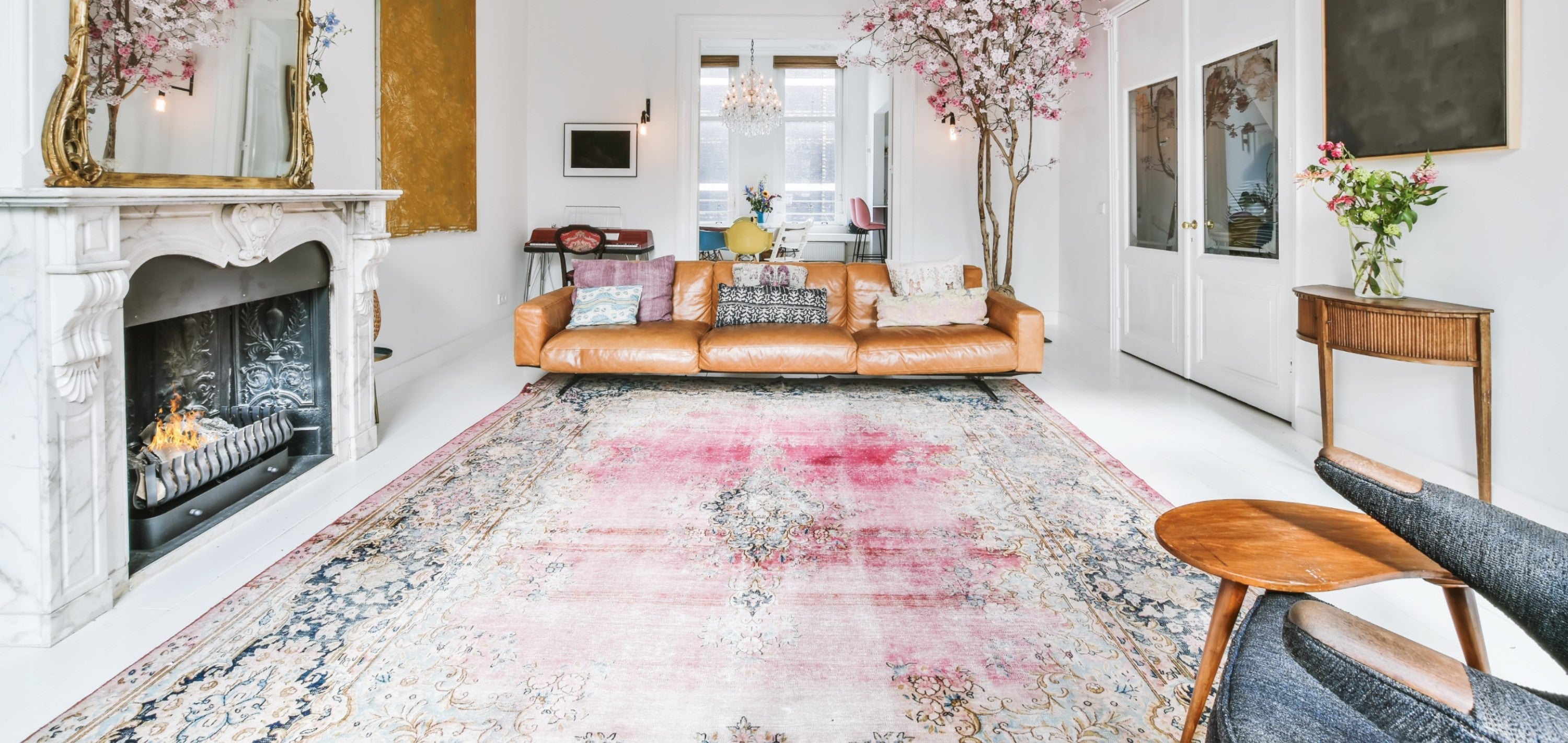
When buying a second-hand rug, pay attention to four things above all: is it truly hand-knotted, is the backing still flexible and sturdy, are there no moth holes or bare patches, and does it smell fresh. A rug with a good backing and some even wear in the pile will last for many more years with normal maintenance. A rug with a dried-out or broken backing will not, no matter how low the price is.
Is a second-hand rug a good buy?
Often, yes. A hand-knotted wool rug is made to be used for decades. Wool springs back, dirt mostly stays in the upper part of the pile, and a rug that has been lying somewhere for years has usually found its color and shape. That is why second-hand rugs are a smart way for many people to acquire a genuine handmade piece.
The risk lies in what you cannot see in a photo. When you buy a rug on Marktplaats, at a thrift store, or at a flea market, you buy it as it is. You may only discover moth holes, a brittle backing, or a persistent odor once you get it home. The checks below will help you spot these problems within ten minutes.
What to look for in a second-hand rug: 8 checks
Take a tape measure, a white cloth, and your phone flashlight with you when viewing the rug. If possible, lay the rug completely flat, and also turn it over to inspect the backing.
- Backing: hand-knotted or machine-made? On a hand-knotted rug, the pattern on the backing is almost as clear as on the front, with small irregularities. A smooth, perfectly uniform backing or a rubber layer indicates a machine-made rug. You can find more characteristics in how to recognize a genuine hand-knotted rug.
- The bend test for the backing. Carefully fold a corner back, with the pile facing outwards. If you hear cracking or see transverse break lines, the cotton backing has dried out. Such a rug will eventually tear, and that is difficult to repair.
- Moths. Look for bare patches where the pile has been eaten down to the knot, fine granules, and lint on the backing. Pay particular attention to areas that were under a sofa or cabinet for a long time, as moths love dark, undisturbed places.
- Wear in the pile. An evenly short pile is not a problem and is typical of an old rug. Local bare strips, for example along a walkway, are a disadvantage. Run your hand over the rug: if you feel wool everywhere, it is in good condition.
- Edges and fringes. Frayed edges or loose fringes may seem minor, but that is where a rug begins to fall apart. Check whether the edges are still tightly finished.
- Stains and bleeding colors. Rub a damp white cloth over a dark area. If the color rubs off, the rug may stain when washed.
- Odor. Smell the front and the back. A musty or ammonia odor may not always be easy to remove. If in doubt, first read why a wool rug smells and what you can do about it.
- Size and flatness. Measure it yourself, excluding the fringes. In advertisements, dimensions are often rounded. Also check whether the rug lies flat or permanently ripples or pulls to one side.
Private seller, thrift store, or dealer: what is the difference?
Where you buy determines what you can do if the rug disappoints you.
| Where | Inspect in advance | Return | What you need to arrange |
|---|---|---|---|
| Private seller (Marktplaats) | Yes, upon collection | No statutory cooling-off period | Transport, washing, moth inspection |
| Thrift store or flea market | Yes | Usually not | Transport, washing, moth inspection |
| Online store | No, photos only | 14-day cooling-off period for distance purchases | Return if in doubt |
If you buy online, pay attention to pitfalls specific to webshops, such as edited photos and vague age claims. These are covered in buying vintage rugs online: 9 pitfalls.
Calculation example: how much does a cheap rug really cost?
A low asking price is only half the story. A second-hand rug from a living room is rarely clean, even if it looks like it. If you have it professionally cleaned, cleaners usually charge per square meter. First calculate the area:
- Rug measuring 280 × 180 cm: 2.80 × 1.80 = 5.04 m²
- Rug measuring 300 × 200 cm: 3.00 × 2.00 = 6 m²
- Runner measuring 350 × 90 cm: 3.50 × 0.90 = 3.15 m²
Multiply that by the per-square-meter price quoted by the cleaner, and add transport and an optional non-slip underlay. Only then can you see whether the purchase is still a good deal. As a rule of thumb: the larger the rug, the more these additional costs add up. If you want to know how much a comparable rug costs from a dealer, check the price guide for vintage rugs.
What not to do
- Buy based on a photo alone. Always ask a private seller for a photo of the backing and a close-up of a corner, or go and see it.
- Place the rug in your living room immediately. If it had moths, you will bring them into your home. Have a second-hand rug cleaned first, or vacuum it thoroughly on both sides.
- Try washing it yourself in the washing machine or with a pressure washer. Wool and cotton shrink unevenly, and colors may bleed.
- Let yourself be enticed by the words "Persian" or "antique". That means nothing in an advertisement. Judge the rug based on the checks above.
- Choose a rug that is too small because it is cheap. A rug that does not fit is still a bad buy, even second-hand.
Second-hand or vintage from a dealer?
A vintage rug is actually also second-hand: it has lain in a home for years before being resold. The difference lies in what has already been done. Lavinta's vintage rugs are hand-knotted from wool and cotton, come from Turkey, and have been washed and low-shorn. Each rug is unique, and you receive a certificate of authenticity with it.
Because you cannot perform the bend test or check the odor yourself online, you have a 14-day cooling-off period. If you are disappointed with the rug, you can return it; you pay the return shipping cost of €10 yourself. Shipping within the EU is free. The dimensions of each rug are given in centimeters; the vintage rugs that have joined the collection in recent weeks measure between approximately 195 × 115 cm and 375 × 270 cm.
Frequently asked questions
Is a second-hand rug hygienic?
Not automatically. Have it cleaned first, or vacuum it thoroughly on both sides, and let it air out for a day before laying it down.
How can you tell if a rug has moths?
You will see small bare patches where the pile has been eaten down to the knot, often with granules or lint on the backing. Pay particular attention to areas that were under furniture.
Can you return a second-hand rug?
Usually not when buying from a private seller or at a thrift store. If you buy online from a store, you have a statutory 14-day cooling-off period.