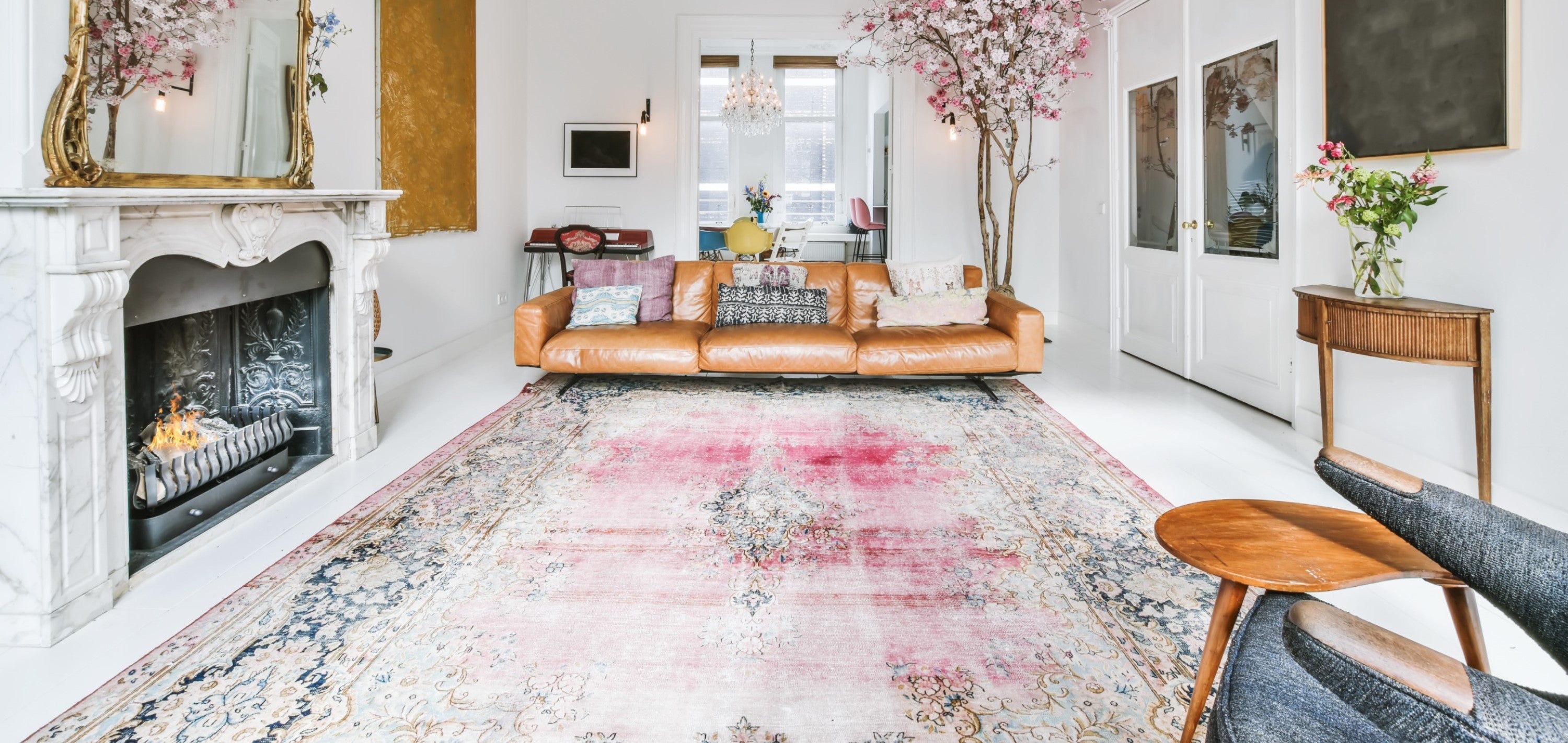
"How can one rug cost €400 and another €4,000?" It's a question we hear weekly. The answer is both simple and complex: prices in the vintage rug world are determined by at least eight factors, and none of them are isolated. In this guide, we'll explain exactly where your money goes when you buy a vintage Turkish rug, and what price ranges you can reasonably expect in 2026.
The eight price factors at a glance
Before we delve into price segments, let's look at the building blocks. Every vintage rug is priced by the sum of these eight elements:
- Age — the older, the rarer, and usually more expensive.
- Size — larger rugs required more material and weaving time.
- Knot density — finer = more labor hours = higher price.
- Material — pure wool vs. wool/silk vs. wool/cotton.
- Condition — how much pile is left, are there repairs, how intact are the edges.
- Origin — Hereke or Kayseri is more expensive than a village rug.
- Aesthetics — a beautifully faded or rare motif drives up the price.
- Rarity — antique patterns or hard-to-find color combinations.
Factor 1: age
The age classifications used within the industry:
- Modern — less than 20 years old. Not vintage.
- Semi-vintage — 20 to 40 years old. Often affordable.
- Vintage — 40 to 80 years old. The true sweet spot.
- Antique — 80 years or older. Often collector's items.
A 60-year-old rug with beautiful patina is generally more expensive in 2026 than a 25-year-old rug of comparable size — simply because time cannot be reversed.
Factor 2: size
Size scales almost linearly with material and weaving costs. General price guidelines for vintage rugs of comparable quality:
- 120 × 180 cm: from approximately 200–500 euros
- 170 × 240 cm: approximately 500–1,200 euros
- 200 × 300 cm: approximately 800–2,000 euros
- 250 × 350 cm: approximately 1,500–3,500 euros
- 300 × 400 cm and larger: from 2,500 euros, no upper limit
Factor 3: knot density
An experienced weaver ties 8,000 to 12,000 knots per day. A rug with 1,500 knots per dm² over an area of 6 m² is roughly 900,000 knots — about 100 working days of weaving by one person. A finer Kayseri with 4,000 knots per dm² requires three times as much time. These labor costs are reflected in the price.
Factor 4: material
- Pure wool — the standard material for 95% of Anatolian rugs.
- Wool on cotton warp — more stable, often with a slightly finer design.
- Wool blended with silk — a sheen effect in parts of the design, increasing the price.
- Full silk (Hereke) — collector's category, thousands to tens of thousands of euros.
Synthetic variants also exist, but they do not fall under "vintage" in the true sense. For the difference, read our guide on wool vs. synthetic rugs.
Factor 5: condition
Condition is perhaps the most underestimated factor. Two seemingly identical rugs can have a 40% price difference purely based on:
- Pile height and evenness.
- Condition of the edges (a frayed edge requires repair).
- Condition of the fringes.
- Number of previous repairs (a neat professional repair results in less loss of value than a poor one).
- Stains or discoloration.
A vintage rug with "patina" — soft fading, evenly worn pile — is actually sought after. A rug with uneven wear or burn holes significantly loses value.
Factor 6: origin
Not all Turkish weaving regions are priced equally. Generally from affordable to rare:
- Village-Sivas, Malatya — often the most accessible.
- Konya, Karapınar — mid-segment.
- Oushak, Kayseri — often more expensive due to popularity in Europe and higher knot density.
- Hereke — collector's item.
More explanation about the regions can be found in our guide on Anatolian vintage rugs and their origins.
Factor 7: aesthetics and color
Aesthetics are largely subjective, but the market has clear preferences:
- Softened, faded color palettes are highly sought after in 2026 and increase the price.
- Deep red tones are slightly less trendy in Dutch interiors, so relatively often affordable.
- Rare colors such as deep indigo or moss green command a premium.
For example, view the distinct colors in our blue vintage rugs: they are harder to find, and thus often priced slightly higher than comparable brown rugs.
Factor 8: rarity and provenance story
A documented rug — we know who made it, in which village, in which decade — is always more valuable than an anonymous rug of comparable quality. The provenance story is an important part of what you buy.
Price segments 2026 — concrete examples
Entry (200–500 euros)
Expect: a smaller size (60 × 100 or 100 × 150 cm), semi-vintage from 20–30 years old, village origin, simple design, possibly slight wear. Great for starting out or as an entryway rug.
Mid-segment (500–1,500 euros)
Expect: sizes 150 × 200 to 200 × 300 cm, true vintage from 40–60 years old, good condition, recognizable regional style. The best-selling segment in our collection.
High segment (1,500–4,000 euros)
Expect: large sizes (250 × 350 cm and larger), older vintage from 50–80 years old, beautiful patina, origin from Oushak or Kayseri, finer knot density. True statement rugs.
Collector's segment (4,000+ euros)
Expect: antique (80+ years), exceptional condition, rare region or motif, often Hereke or fine Kayseri with silk. These are investment objects.
Common price pitfalls
- "Vintage" as a marketing term. Some sellers sell 5-year-old rugs as vintage. Truly vintage only starts from 20 years, ideally 40+.
- Too low a price for the claimed age. An "antique" rug for 250 euros is rarely correct — distrust extreme bargains.
- No provenance documentation. Serious dealers provide origin and period.
- Hidden restoration costs. Always ask if a rug is suspiciously low-priced — you might have to pay for repairs.
Is a vintage rug an investment?
For most buyers: no, not in the financial sense. You buy it to put in your home, to use, to enjoy. But because the supply of truly old, beautiful Anatolian rugs is finite — younger generations in Turkish villages are weaving less and less — the price of quality pieces is structurally increasing. A well-bought vintage rug does not lose value, and may even be worth more after 10 years.
Finally
A vintage rug is not a piece of furniture; it is a handmade cultural product with a lifelong story. The price reflects decades of history, scarcity, material, and labor. When you understand what you are paying for, you not only buy more consciously — you also buy with more pleasure.
View our vintage rug collection; all rugs are provided with origin, age estimate, and condition description. Still unsure what you need? Also read our complete guide to vintage rugs for the broader picture.