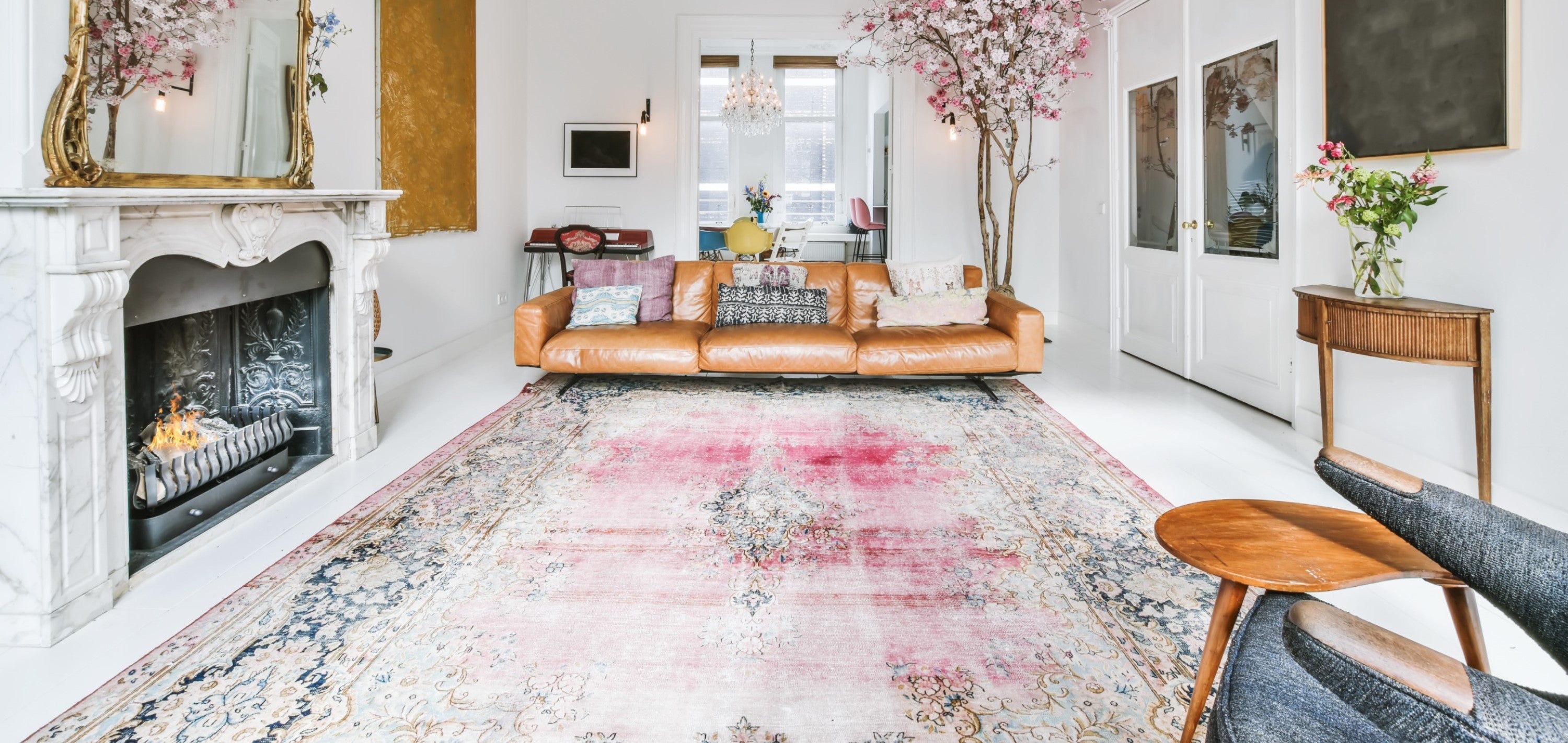
'Can I place a vintage rug on underfloor heating?' is one of the most frequently asked questions at Lavinta. The short answer: yes, perfectly fine — provided you follow a few simple guidelines. In this article, everything you need to know.
👉 Want to learn more about vintage materials first? Read our wool vs synthetic article.
Why wool works perfectly with underfloor heating
Wool is naturally an excellent heat conductor. That sounds contradictory — doesn't wool insulate? Both are true: wool fibers trap air (insulating) but conduct heat well (transparent to radiation). That's exactly what you want for underfloor heating: the heat passes through, the comfort remains.
Synthetic carpets, on the other hand, often act as too good an insulator. The heat gets trapped underneath, your floor becomes hotter, and you waste energy.
The do's
1. Check the tog value
The 'tog' value measures thermal resistance. For underfloor heating: choose carpet + underlay together below 2.5 tog. A typical Lavinta vintage wool carpet has a tog around 1.0-1.5 — well within the margin.
2. Use a suitable underlay
If you want an underlay (for extra comfort or anti-slip): choose a thin model suitable for underfloor heating. Avoid thick foam-rubber underlays — these insulate too much.
3. Warm up gradually on first use
With new underfloor heating and a new rug: for the first week, set the temperature to a maximum of 22°C before increasing it. This prevents thermal stress on the wool fibers.
4. Monitor the surface temperature
Under normal use, the top of a rug remains below 27°C — perfectly fine for wool. Be careful with underfloor heating at maximum power for extended periods: the top can then reach 30°C+.
The don'ts
1. No thick carpet + thick underlay
The combination of a wool carpet (2 cm) + thick underlay (1 cm) = 3 cm total insulation. That blocks too much heat. Choose one of the two.
2. No synthetic rugs
Polypropylene or polyester can melt with prolonged heat. Underfloor heating + synthetic carpet is a bad combination in the long run.
3. Do not lay over pipes under furniture legs
Avoid heavy furniture on the rug directly above heating pipes. The combined pressure + heat can damage the wool fibers under the legs.
4. Do not increase the temperature to get the same warmth
Many people think they need to heat more because the carpet 'gets in the way'. A thin wool carpet minimally reduces the effect — perhaps 5%. Higher temperatures consume more energy and can damage wool in the long term.
Specific to vintage
Vintage rugs are often already low-pile (the pile is shorter), making them work even better with underfloor heating than thick-pile modern carpets. A typical Lavinta vintage rug is 0.5-1 cm high — ideal.
Added benefit: vintage wool fibers are 'hardened' by time — they have already survived decades of temperature fluctuations. They are more 'tempered' than new wool.
What to do for specific floor types
Underfloor heating + tiles
Perfect combination with vintage wool. Heat distributes evenly, and the rug dampens the 'cold feet feeling' when the heating is off.
Underfloor heating + wooden floor
Also works — ensure the rug is not so large that it covers the entire floor (the floor needs to breathe through temperature fluctuations).
Underfloor heating + laminate
Possible but with caution. Some laminate can react to alternating insulation. Leave space around the rug to ensure temperature distribution.
Frequently asked questions
Will I lose a lot of heat with a vintage rug on top?
Minimal — typically 3-8% depending on thickness. Not noticeable for most homes.
Can I leave the rug in place if the heating is high?
Yes, under normal indoor temperatures (up to 25-27°C surface) wool is fine.
Will my vintage rug be damaged if it gets hotter at night?
No. Wool can fluctuate between 15°C and 30°C without problems — it does so naturally with the seasons.
Conclusion
Vintage wool carpets and underfloor heating are a fantastic combination. It's one of the reasons why Turkish hand-knotted rugs have been so popular in the Netherlands for so long: they work in our colder climates where underfloor heating is standard. Follow the guidelines, choose a thin underlay or none, and enjoy a warm, comfortable rug for decades.
→ View Lavinta's low-pile vintage collection (perfect for underfloor heating)
Questions about your specific situation? Contact us — we'd be happy to advise you.