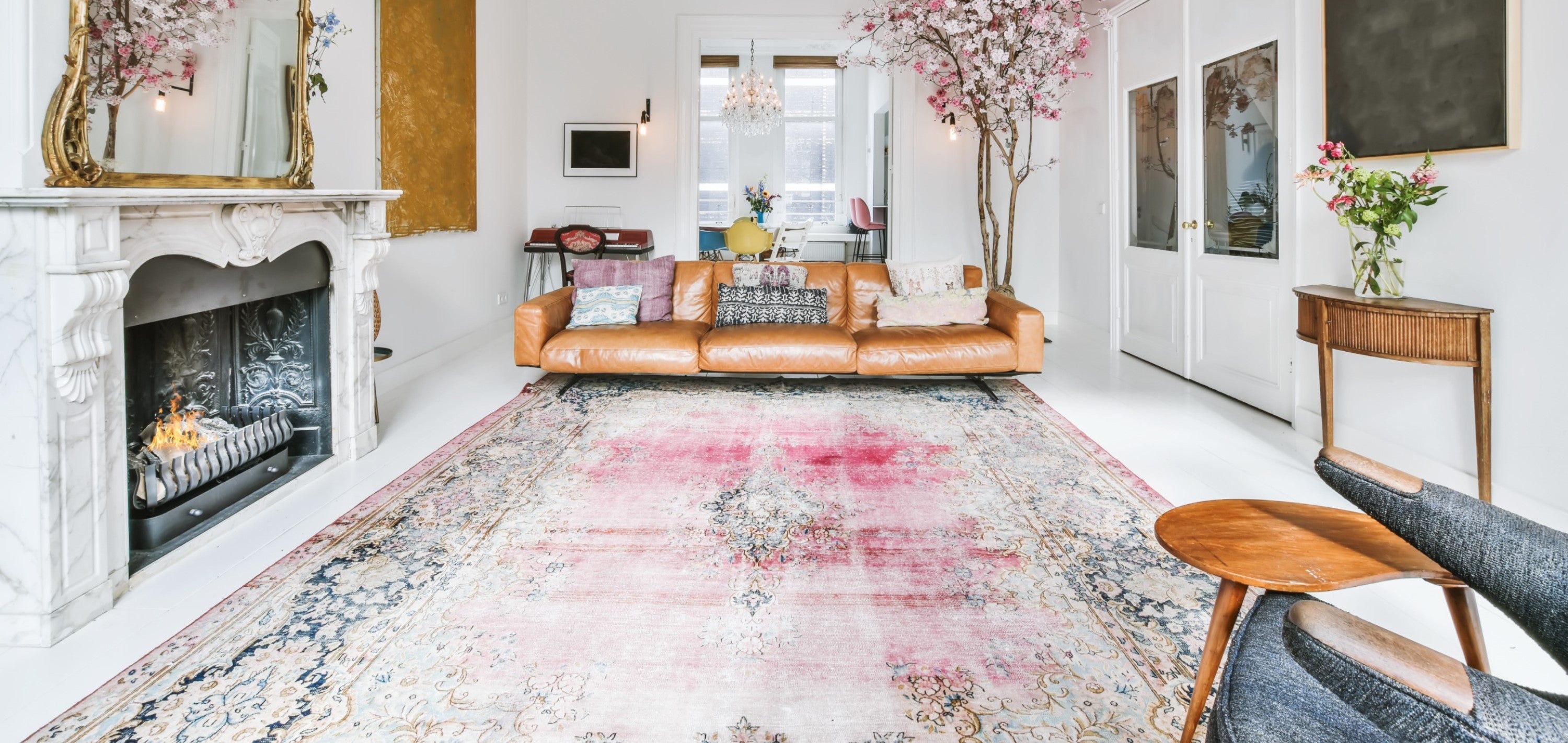
Do you have wall-to-wall carpeting in your living or bedroom, but feel it lacks atmosphere and character? A rug on top is a clever solution. It works perfectly — provided you know a few things. In this guide, you will learn which type of rug works best, how to prevent it from sliding, and how to choose the right color and size.
Why put a rug on carpet?
- Atmosphere and color: wall-to-wall carpeting is often solid and neutral. A rug adds pattern and character.
- Defining zones: in a large room, a rug anchors a seating or reading area.
- Protection: a rug protects the carpet in high-traffic areas.
- Rented homes: can't replace the carpet? A rug transforms the look without any demolition work.
Which type of rug works best?
Low-pile and flat: the best choice
A low-pile hand-knotted rug or a kilim lies stably on carpet and stands out clearly as a distinct element. Vintage rugs are generally washed and sheared low, which helps them lie flat and steady on soft surfaces.
High-pile on high-pile: better to avoid
A thick, high-pile rug on high-pile carpet feels unstable, slides more easily, and can quickly look cluttered. Read more about the differences in high-pile vs. low-pile rugs.
The rule of thumb
The shorter and flatter your wall-to-wall carpeting, the more choices you have. With high-pile carpet, it is best to choose a flat rug like a kilim.
Preventing the rug from "creeping"
On carpet, a rug won't slide as easily as it does on laminate, but it can slowly "creep" in one direction and form wrinkles. Here is how to prevent that:
- Use an underlay designed for rug-on-carpet. These have a grip structure that locks into the carpet fibers. A standard rubber underlay meant for hard floors is less effective here. More on this in our guide to non-slip underlays.
- Place furniture on the rug. The front legs of a sofa or a coffee table will keep the rug in place.
- Choose a heavier rug. A hand-knotted wool rug is more stable than a light synthetic one.
- Rotate the rug 180 degrees twice a year. This ensures even wear and prevents it from constantly creeping in the same direction.
Choosing a color: contrast is key
A rug that is almost the same color as your carpet will disappear into the room. Choose contrast intentionally:
- Light carpet (beige, cream, light grey) → a rug with deeper colors, such as red, blue, or green.
- Dark carpet (anthracite, brown) → a light or colorful rug, such as beige and light vintage, pink, or yellow.
- Solid carpet → opt for a rug with a pattern.
Find more color advice in how to choose the right rug color?
What size?
On carpet, a rug can be slightly smaller than on a hard floor, as the carpet itself already provides warmth. Always leave at least 30 cm of carpet visible around the edges so the rug stands out as a distinct element. For specific sizes per room: see our sizing guide or use the size calculator.